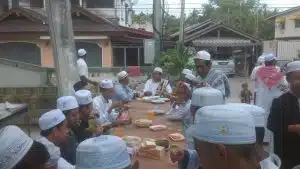
Maria Ulfa Fauzi, AIMEP 2021
Yogyakarta, Indonesia
The month of Ramadan is a glorious month and highly awaited by Muslims around the world, not only for fasting throughout the month but also for experiencing the joy of togetherness through various celebrations, especially in Indonesia.
Nyadran and padusan are two important traditions for Javanese people in Indonesia. This tradition has been rooted in ancient Javanese beliefs for hundreds of years and is still practiced to this day. Nyadran and padusan are not only annual rituals leading up to the month of Ramadan but also hold deep meaning and value in preserving spiritual and communal connections, especially for the local community.
These practices hold great significance as they blend local customs with religious values, creating a unique cultural tapestry in Java. Nyadran is a traditional Javanese tradition that revolves around paying respects to ancestors and typically takes place in the month of Rajab, and padusan is another Javanese tradition closely associated with purification rituals before Ramadan.
The word nyadran is believed to derive from the Sanskrit word “sradda”, meaning “faith” or “belief”. In practice, it refers to a ritual as a manifestation of faith or belief which involves sending prayers to our ancestors. In the Hindu tradition “sradda” itself is a ritual to worship and eulogize the ancestors, which is even stated in the Veda scripture. Modern scholarship understands nyadran as a form of religious syncretism manifested through rituals developed in the Javanese tradition.
If we refer to historical records, “sradda”, is a religious ritual that was developed by the Hindu-Javanese community in the 13th century AD. After the arrival of Islam in Java, this religious ritual was not immediately banned or lost; instead, it was retained, maintained, and developed with some adjustments and modifications. By incorporating Islamic elements and values, the nyadran tradition still survives to this day, especially in areas with strong Javanese roots, such as Yogyakarta, Solo, and rural Javanese regions.
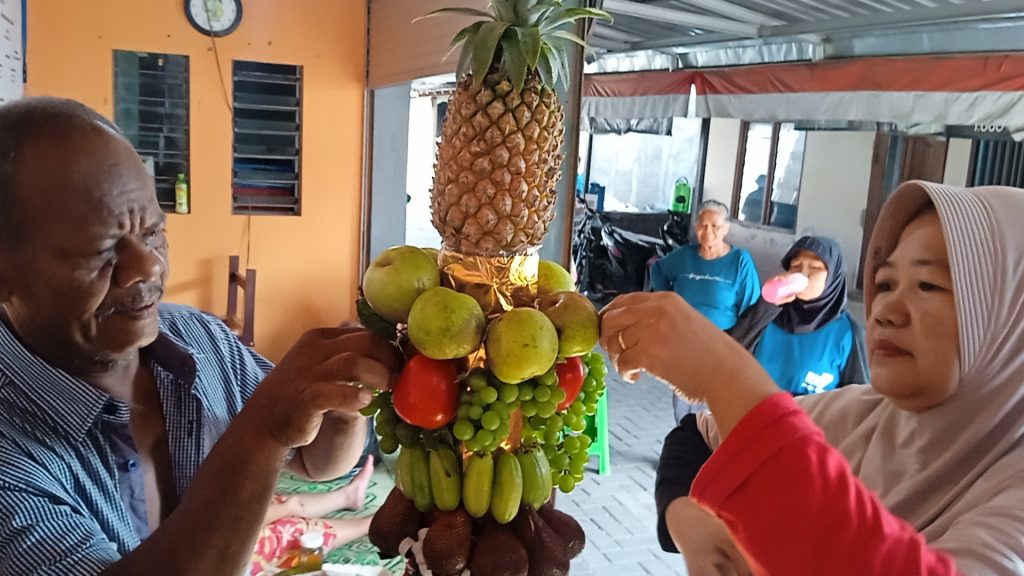
The nyadran ritual typically commences on the 15th of Sha’ban, the month preceding Ramadan in the Islamic calendar, involving communities in villages or smaller areas. The ceremony encompasses a communal gathering of villagers at a local mosque or sacred site, such as a makam or graveyard.
The nyadran ritual consists of several components, typically commencing with Sema’an (reciting al-Quran at the local mosque), Merti Desa (cleaning the village), Kenduren (communal feast), and often added with Ketoprak, a theatrical genre of Java featuring actors who may also sing to the accompaniment of the gamelan orchestra. After several days of Ketoprak performances, village members will join together to undertake a pilgrimage to the cemetery, cleaning the graveyard while bringing offerings. In a more extensive variation of the nyadran ritual, larger village communities may celebrate by slaughtering a goat or cow as a gesture of gratitude for welcoming the month of Ramadan. The meat is then distributed to all residents in the form of cooked food. The main purpose of nyadran is to strengthen the sense of community and spirituality among the people. The atmosphere is one of unity and gratitude, emphasizing the importance of communal ties and spiritual reflection.
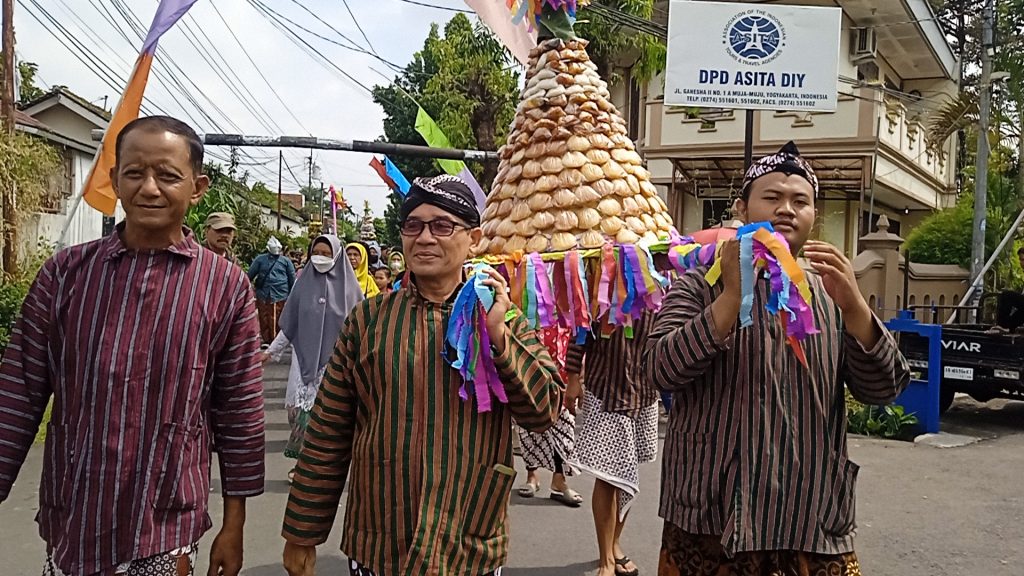
Beside nyadran, the Javanese people also practice the padusan ritual to welcome the month of Ramadan. This tradition is influenced by Hindu-Buddhist beliefs that predate the spread of Islam in Java. It was utilized as a method of self-purification for knights, poets, Brahmins, and masters during the Hindu Majapahit Kingdom. In padusan rituals, the water element holds significant importance. To perform padusan, local people will visit a spring or another water source and participate in a self-cleansing ritual together.
The padusan tradition is still widely practiced by people in Central Java and Yogyakarta. In Javanese, padusan is also described as “adus”, a word which signifies cleansing. The Padusan ritual in local Javanese society is seen as a form of preparation for welcoming the month of Ramadan by purifying both the body and soul. Spiritually, individuals prepare themselves by increasing dhikr and reciting the Quran. Meanwhile, the physical aspect usually involves cleaning the mosque, traditional langgar (prayer house), house, and, most importantly cleaning their body.

In modern times, nyadran and padusan continue to hold significant importance in Javanese society, although their practices may have evolved or adapted to the changing times. These traditions serve as a bridge between the past and present, preserving the cultural heritage while allowing for its continued relevance and adaptation in contemporary Javanese Islamic life.
Photo credit : Much Fatchurochman